
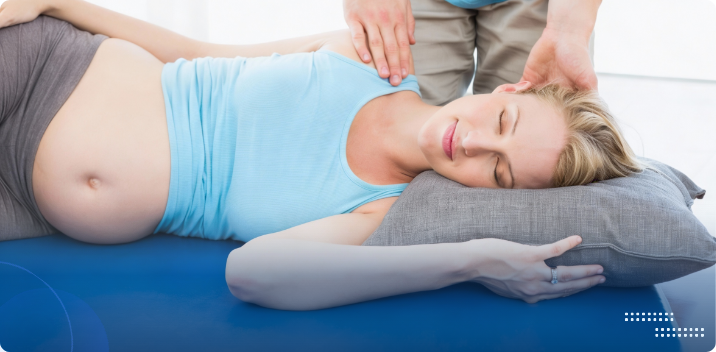
Pregnancy and the postpartum period change how your body carries weight and manages pressure. As your center of mass shifts during pregnancy and then readjusts after delivery, the hips and pelvis often take on new stress.
Seeing a prenatal and postpartum chiropractor in New York is usually less about fixing a symptom and more about getting clarity. Which discomfort is a normal adaptation, which pattern deserves an exam, and what conservative steps are worth your time?
This guide explains why back, pelvic, and hip stress can show up during pregnancy and postpartum recovery, what prenatal and postpartum chiropractic care may involve, and how to know when it is time to schedule a visit at Integra Health.
Why Pregnancy and Postpartum Can Change How Your Back and Pelvis Feel
As pregnancy progresses, the body solves a real engineering problem: how to stay stable while weight distribution changes week to week. After delivery, the body faces a different challenge: rebalancing while recovering from birth and adapting to new physical demands like feeding, carrying, and lifting your baby.
Common drivers include:
-
Load shift and posture changes: During pregnancy, as the abdomen grows, the pelvis often tips, and the low back works harder to keep you upright. Postpartum, you may carry your baby on one hip repeatedly or lean over for feedings and diaper changes. These patterns can increase irritation in the lumbar joints and the sacroiliac joints.
-
Hip and pelvic demand: Walking, stairs, and standing for long periods may ask more of hip stabilizers and deep core support. When those systems fatigue during pregnancy or remain weakened postpartum, you may feel hip pinching, glute soreness, or pelvic heaviness.
-
Ligament and joint sensitivity: Hormonal changes can increase tissue laxity during pregnancy and can persist for months after delivery, especially if breastfeeding. That doesn't automatically mean injury, but it can change how joints feel under load.
-
Sleep and recovery disruption: When sleep quality drops, pain sensitivity often rises. The same movement can feel sharper when recovery is compromised, whether from pregnancy discomfort or nighttime feedings with a newborn.
None of this means you should power through. It means your plan should match the pattern, your daily demands, and your medical guidance from your OB, midwife, or primary care provider.

The Science Behind Prenatal and Postpartum Chiropractic Care in New York
Prenatal and postpartum chiropractic care is typically focused on improving motion, reducing overload on irritated structures, and supporting better movement choices. The best care is conservative, specific, and tied to what shows up on the exam.
Joint Loading, Pelvic Mechanics, and Motion Tolerance
A pregnancy or postpartum pain pattern is often less about one specific problem area and more about how your joints share the load.
A prenatal or postpartum exam commonly looks at:
-
Range of motion in the low back, hips, and thoracic spine.
-
Pelvic mechanics during walking and simple movements.
-
Provocation patterns, meaning what reliably reproduces symptoms.
-
Strength and control markers, especially around hip stability and core function.
If joint restriction or irritation shows up, care may include gentle joint mobilization or chiropractic adjustment when appropriate, along with positioning strategies that reduce repeated strain. The goal is to help your body tolerate normal movement with less protective tension.
Soft Tissue Guarding and Physiological Feedback Patterns
When the body senses a threat, it often increases muscle tone to protect joints. Over time, that guarding can turn into a repeating pattern: tightness changes movement, movement adds irritation, and irritation keeps the muscles on alert.
This is why many people feel stuck in the same cycle:
-
Shorter stride
-
More low back extension
-
Less hip rotation
-
More compression through the pelvis
A practical plan often includes soft tissue support, targeted mobility, and small home steps. The emphasis is on repeatable inputs that calm the system, not intense stretching that flares symptoms.
Sympathetic Nervous System, Sleep, and Muscle Tone
Pregnancy and the postpartum period can amplify stress on the autonomic nervous system. When the sympathetic nervous system is more active, muscle tone tends to rise, and pain signals can feel louder. You might notice that discomfort spikes after a high-stress day, sleep feels lighter, and your body stays keyed up even when you are exhausted.
Care often pairs mechanical work with simple recovery supports, such as breath mechanics, positioning, and short movement breaks. This is not a mindset talk. It is about physiological regulation and response patterns that shape how your body tolerates normal load.
When to Book a Visit in New York
Some discomfort can be part of normal adaptation. The question is whether your pattern is trending toward better function or shrinking your options.
Consider scheduling an evaluation if you notice:
-
Pain that repeats with the same daily triggers, like standing to cook, driving, or carrying a toddler.
-
Hip or pelvic discomfort that makes walking feel limited or unstable.
-
Sharp pain when rolling in bed, getting up from the couch, or climbing stairs.
-
Sciatica-like symptoms, tingling, or pain that tracks down the leg.
-
Headaches or upper back tension that escalates as the week goes on.
-
Sleep disruption because no position feels consistently comfortable.
-
Postpartum wrist, shoulder, or neck pain from repetitive lifting, feeding, or carrying.
-
Difficulty returning to exercise or daily activities weeks after delivery.
This is also where a prenatal and postpartum chiropractor can help with clarity. You should leave with a simple explanation of what is most likely driving your symptoms, what to monitor, and what progress should look like over the next few weeks.
Seek urgent medical care if you have red-flag symptoms such as severe abdominal pain, vaginal bleeding, sudden swelling, severe headache with visual changes, fever, or new neurological loss. Chiropractic care should complement, not replace, obstetric or primary medical guidance.
What to Expect During Your Visit
A first prenatal or postpartum visit should feel organized and grounded.
- A Clear Timeline
You will review when symptoms started, what reliably triggers them, what relieves them, and how your sleep and activity have changed.
- A Practical Exam
Expect movement-based testing, posture and joint motion checks, and simple screens that look for patterns that do not fit typical pregnancy-related or postpartum mechanics.
- A Plan With Checkpoints
If care is appropriate, the plan should match your findings and your pregnancy stage or postpartum timeline. It should include measurable markers like walking tolerance, sleep comfort, and how quickly you recover after activity.
- Home Steps You Can Actually Do
You may get short, specific steps that fit into a real schedule. Think two minutes between meetings or feedings, not a 45-minute routine you will never repeat.
At Integra Health, prenatal and postpartum visits like this are delivered through our chiropractic care services, with an exam-first approach and clear checkpoints.

A Low-Friction Next Step
If pregnancy or postpartum recovery is starting to change how you move, sleep, or get through the day, you do not need to wait until it becomes unmanageable. A structured exam can clarify what is driving the stress on your back, pelvis, or hips, and what a conservative plan should prioritize first.
Schedule an appointment at Integra Health. A visit with a prenatal and postpartum chiropractor in New York should leave you with a clear explanation, a short list of practical next steps, and simple checkpoints to track progress over time.
Ready to take the next step?
Talk with the Integra Health team about a Pre & Postnatal Care plan built around your goals, in Hawthorne, NY.