
Chronic pain and soft tissue injuries can be easy to dismiss as something you simply have to live with. Your knee aches after every run, your shoulder never fully healed after that old injury, or your back has been stiff and sore for so long that you have started adjusting your life around it rather than expecting it to get better. It is not always obvious why the body stops healing on its own, but when that cycle continues long enough, it affects your mobility, your activity level, and your quality of life in ways that extend well beyond the original injury.
At Integra Health, we work with patients throughout Westchester County who have tried conventional approaches to pain and injury recovery without achieving the lasting results they need. PRP therapy offers a drug-free, non-surgical alternative that works with your body's own biological systems to accelerate tissue repair, reduce chronic inflammation, and restore function to damaged structures that have not healed fully on their own.
Does PRP Therapy Actually Work?
Many cases of chronic pain and persistent soft tissue injury involve a disruption in the body's normal healing cascade. After the acute phase of an injury passes, damaged tendons, ligaments, cartilage, and joint tissue may receive inadequate blood flow and growth factor activity to complete the repair process. The result is a chronic injury state in which the tissue remains structurally compromised, continues to generate pain signals, and fails to regain its original strength and integrity.
PRP therapy works by concentrating the growth factors and platelets found naturally in your own blood and delivering them directly to the site of injury or degeneration. That concentrated dose of biological healing agents restarts and amplifies the body's repair response in tissues that have stalled in chronic dysfunction. Research supports meaningful outcomes for PRP in the treatment of tendon injuries, osteoarthritis, ligament damage, and degenerative joint conditions, with studies documenting reduced pain, improved function, and measurable structural improvements in treated tissue. Patients also tend to respond well because the treatment uses material derived from their own blood, which eliminates the risk of allergic reaction or rejection.
How PRP Therapy Works
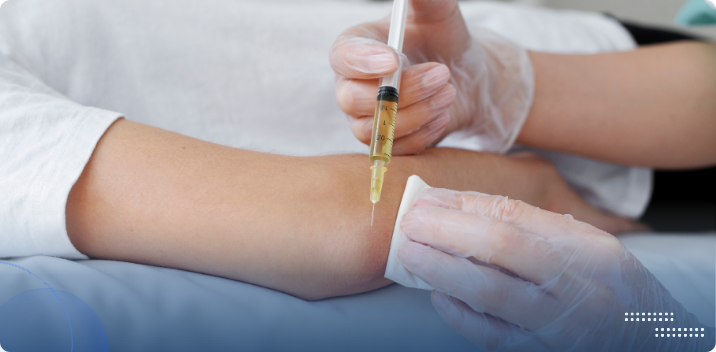
PRP therapy is a straightforward in-office procedure that most patients find far less involved than they anticipated. A small amount of blood is drawn from the patient and placed in a centrifuge that spins it at high speed to separate the platelet-rich plasma from the other blood components. The concentrated PRP is then injected precisely into the target area under the guidance of the treating provider. The entire process typically takes less than an hour, and because the material comes directly from the patient, there is no recovery period associated with the preparation itself.
The process at Integra Health begins with a thorough evaluation of the patient's injury history, current symptoms, imaging findings where applicable, and overall health profile. From there, a care plan is built around the patient's specific condition rather than a generic protocol. Dr. Noble Thomas and Dr. Ritika Merai work to ensure that PRP injections are targeted accurately and sequenced appropriately within the broader treatment plan, so the biological stimulus provided by PRP is supported by the structural and rehabilitative work happening in parallel.
PRP Therapy vs. Conventional Pain Management
Conventional approaches to chronic pain and soft tissue injury typically focus on managing symptoms as they arise. Corticosteroid injections reduce inflammation in the short term but have well-documented effects on tissue integrity when used repeatedly, and they do nothing to stimulate the structural repair that would allow the underlying injury to resolve. Anti-inflammatory medications provide temporary relief without addressing the biological reasons the tissue has failed to heal. Surgery carries significant recovery demands and is not always appropriate or effective for the types of soft tissue and joint conditions that respond well to regenerative care.
PRP therapy works differently by addressing the biological deficit at the core of the chronic injury rather than suppressing the symptoms it produces. Results develop over a course of care as the tissue repair process unfolds, and many patients report meaningful improvements in pain levels, strength, and functional capacity within weeks of their first treatment.

Why Biological Healing Support Matters for Chronic Injuries
The Body 's Healing Capacity Has Limits
Tendons, ligaments, and cartilage are among the most poorly vascularized structures in the body, meaning they receive relatively limited blood supply compared to muscle and bone tissue. That limited circulation restricts the delivery of the growth factors, oxygen, and nutrients that healing tissue depends on. When an injury to these structures becomes chronic, the healing response often becomes self-perpetuating in the wrong direction, with ongoing inflammation and inadequate repair activity creating a cycle of pain and dysfunction that conventional treatments struggle to break.
Conditions We Commonly Address
Integra Health provides PRP therapy for a wide range of musculoskeletal and joint conditions. Knee pain from osteoarthritis or meniscus injury is among the most common reasons patients seek PRP care, as the concentrated growth factors help reduce joint inflammation and stimulate cartilage repair in an environment where circulation is naturally limited. Chronic tendon injuries including rotator cuff damage, tennis elbow, golfer's elbow, Achilles tendinopathy, and plantar fasciitis respond well to PRP because the therapy directly targets the failed healing response in tendon tissue. Patients with hip pain, shoulder instability, ligament sprains, and post-surgical recovery challenges also benefit from the biological support that PRP provides. Active patients in Westchester County managing sports injuries or overuse conditions often use PRP to accelerate return to activity and reduce the risk of reinjury.
Building a Foundation for Long-Term Tissue Health
The goal of PRP therapy is not to temporarily suppress pain and send the patient back to the same conditions that created the injury in the first place. The goal is to stimulate genuine structural repair in the damaged tissue so that the patient recovers the strength, flexibility, and functional capacity that chronic injury has taken away. When that biological repair is supported by the appropriate structural and rehabilitative care, the improvements are durable and the likelihood of recurrence is meaningfully reduced.
How PRP Therapy Fits Into a Comprehensive Care Plan
PRP therapy works best when it is part of a broader approach to your recovery. At Integra Health, care is never delivered in isolation. The doctors take time to understand your full injury history, your functional goals, and any treatments or evaluations you have already pursued. When appropriate, the team integrates PRP with complementary therapies to ensure the biological healing it initiates is reinforced by structural correction and rehabilitative support.
Complementary Therapies That Amplify Results
Chiropractic adjustments restore proper spinal and joint alignment so that healing tissue is not subjected to the continued mechanical stress that contributed to the original injury. Class IV deep tissue laser therapy reduces inflammation in the surrounding soft tissue and promotes cellular repair at an accelerated rate, working in concert with the growth factors delivered by PRP. Shockwave therapy stimulates additional tissue regeneration in tendons and connective tissue and is frequently used alongside PRP for conditions like plantar fasciitis and chronic tendinopathy. Massage therapy reduces the chronic muscular tension that develops as compensation patterns around an injured joint, supporting proper biomechanics as the tissue heals. When these modalities are combined with PRP, patients consistently achieve deeper and more durable results than any single therapy can deliver on its own.

Schedule Your PRP Evaluation
If chronic joint pain, a persistent soft tissue injury, or a condition that has not responded to conventional treatment has been limiting how you move, train, or live your daily life, you do not have to accept that limitation as permanent. PRP therapy can address the biological and structural factors driving your symptoms without surgery, without extended medication use, and without lengthy downtime.
The right care plan is built around your specific injury, your functional goals, and what your body needs to complete the healing process it was unable to finish on its own. If you want a clear next step and a regenerative approach to your pain and recovery, call Integra Health to schedule your evaluation.
Ready to take the next step?
Talk with the Integra Health team about a PRP Treatments plan built around your goals, in Hawthorne, NY.