
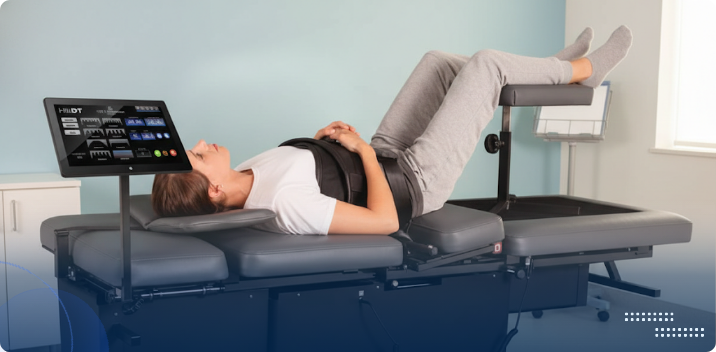
Spinal decompression therapy is often discussed as a non-surgical option, but the real question is simpler: Does it match what your body is doing right now? Back pain, neck discomfort, and nerve-related symptoms can feel inconsistent when you are trying to get through meetings, driving, workouts, and sleep on a tight schedule. Most of the time, they follow repeatable patterns. The key is learning how to recognize them.
This guide is designed for individuals who seek clear decision-making criteria. You will get the clinical why behind decompression, when it is worth considering, and when a different next step may make more sense.
Why Spinal Pain Can Feel Unpredictable (and Why It Is Not)
Spinal pain is often a symptom pattern, not a single diagnosis. It can involve irritation along nerve pathways, disc-related changes, joint dysfunction, or soft tissues that are no longer moving well. That sensitivity may show up as localized back pain, radiating discomfort into the arms or legs, or stiffness that limits your daily function.
When the sympathetic nervous system is more active, your body shifts into protection. Muscle tone increases. Your range of comfortable motion gets smaller. Pain signals can feel louder, even during routine transitions like getting out of a car or standing up after sitting.
For many busy professionals, the next step becomes unintentional over-guarding. You begin to avoid the positions that flare symptoms, and your body loses confidence in normal movement. The goal is to rebuild safer motion and steadier load-sharing so your system can stop treating everyday activity like a warning signal.
Decompression is designed to change pressure and spacing, so irritated tissues have a better chance to calm down.
The Science Behind Spinal Decompression
Spinal decompression is a form of controlled traction. In plain terms, it is a structured way to reduce compressive load through parts of the spine for short periods, then reintroduce load in a more organized way.
This matters because spinal conditions often worsen when the body is reacting to pressure, prolonged sitting, or repeated bending. Decompression is not intended to override your symptoms. It's meant to change the conditions around the irritated area so the system can settle and tolerate motion more smoothly.

What Decompression Is Trying to Change
Mechanically, decompression is designed to change pressure and spacing, so irritated tissues have a better chance to calm down. That can create a window where movement feels less guarded and daily tasks feel more manageable.
There is also a physiological effect. When the body feels safer, muscle tone tends to drop, and circulation can improve in the region. This is a way to create a less reactive environment so the right rehab steps can build more durable capacity.
SpineMED is the name of a computerized decompression system that delivers traction in a measured, repeatable way. It's one tool within a broader plan. The outcome comes from matching the approach to your exam findings and tracking changes you can feel in day-to-day life.
When Decompression Makes Sense, and When It Does Not
Spinal pain decisions should be based on repeatable inputs, not worry. The goal is to identify what consistently triggers symptoms, what reliably eases them, and whether the pattern points to a load problem that decompression can address.
Patterns That Often Respond Well
Decompression is often considered when symptoms behave like a pressure and tolerance issue. A common sign is pain that ramps up with sitting, driving, or bending, then settles when you change position and give your system a chance to reset.
You may be a good candidate if your symptoms:
-
Flare during long commutes or desk-heavy days and ease with short movement breaks.
-
Feel worse after repeated bending, lifting, or sustained forward-leaning posture.
-
Improve when the spine is supported, and your movement stays controlled and calm.
-
Include radiating discomfort that responds to position changes or rest.
-
Involve localized back or neck pain that worsens with compression-based activities.
These patterns suggest the system is reacting to pressure and mechanical stress. Decompression may help reduce that irritation, so rehab can work better.
When Decompression Is Not the First Move
Some situations need medical evaluation first, especially when symptoms change fast. Seek urgent care if you have new bowel or bladder changes, rapidly worsening weakness, severe numbness, fever, or symptoms after significant trauma.
Decompression is not always the best first step when compression is not the main driver. Some spinal pain patterns are more closely tied to joint restriction, protective muscle tone, inflammatory conditions, or poor tolerance to certain movements. In those cases, targeted rehab, postural correction, or a different hands-on approach may be the smarter place to start.
Decision Criteria You Can Track
If you prefer clear checkpoints, track these questions for one week:
-
What specific position triggers symptoms fastest: sitting, standing, or bending?
-
Does a short walk or position change reduce symptoms within ten minutes?
-
What happens the next day after activity, better, worse, or unchanged?
-
Are symptoms spreading or centralizing to one area?
-
Are you sleeping longer before waking up from discomfort?
These details make it easier to decide whether decompression is a sensible trial or whether a different approach should take priority first.
Why This Choice Looks Different for New York Patients
In New York, spinal issues often show up in a predictable lifestyle mix: long commutes on subways and trains, desk-heavy workdays, and a second shift at home. People navigating the demands of city life often describe the same problem: they feel fine at first, then the pain creeps in after sitting too long or standing on crowded platforms.
Location matters when consistency is part of the plan. Integra Health offers accessible care that fits into your schedule, whether you're commuting through Manhattan or working in one of the boroughs.
It also helps when your care is coordinated. You can combine rehab-based support with conservative spine care in one place. Depending on your exam findings, your plan may also include chiropractic care to support alignment, reduce protective joint restriction, and improve how your body tolerates day-to-day load.
What to Expect During a Visit
A strong first visit should feel structured. You will review a clear timeline, what makes symptoms worse, what helps, and how your routine has changed.
The exam is practical and movement-based. It often includes posture checks, range of motion, joint motion, and simple functional measures tied to what you feel day to day. The goal is to confirm whether your pattern looks compression-sensitive, load-sensitive, or driven by another factor that should guide the plan.
If decompression is a fit, your plan should be presented with clear checkpoints rather than an open-ended schedule. You should know what is being tracked, such as improved sitting tolerance, smoother transitions from sitting to standing, and less sensitivity after your commute.
You should also leave with a few simple home steps that reinforce progress between visits, often focused on mobility, pacing, and controlled strength.

Choosing Your Next Step
Spinal conditions tend to improve when you stop chasing symptoms and start working from a clear pattern. A measured next step considers the likely mechanical driver, your nervous system 's protective response, and what your body can tolerate right now, not what you used to handle before this started.
If the problem keeps repeating, a structured evaluation can replace guesswork with decision criteria you can track. Schedule an appointment with Integra Health and bring a brief timeline of what triggers symptoms and what reliably settles them. When your findings support it, spinal decompression therapy can be a practical move toward steadier motion and a calmer day-to-day baseline.
Ready to take the next step?
Talk with the Integra Health team about a Spinal Decompression Therapy plan built around your goals, in Hawthorne, NY.