Services
Chiropractic CareSpinal DecompressionDeep Tissue LaserShockwave TherapyPRP TreatmentsNeuropathy TreatmentSports ChiropractorMassage TherapyNutrition CoachingPediatric CarePre & Postnatal CareAll ServicesConditions
Back PainNeck PainSciaticaShoulder InjuryKnee PainHip PainPlantar FasciitisAuto Accident InjuryWhiplashAreas Served
HawthorneMount PleasantWhite PlainsMount KiscoArmonkPleasantvilleChappaquaBriarcliff ManorTarrytownElmsfordValhallaThornwood


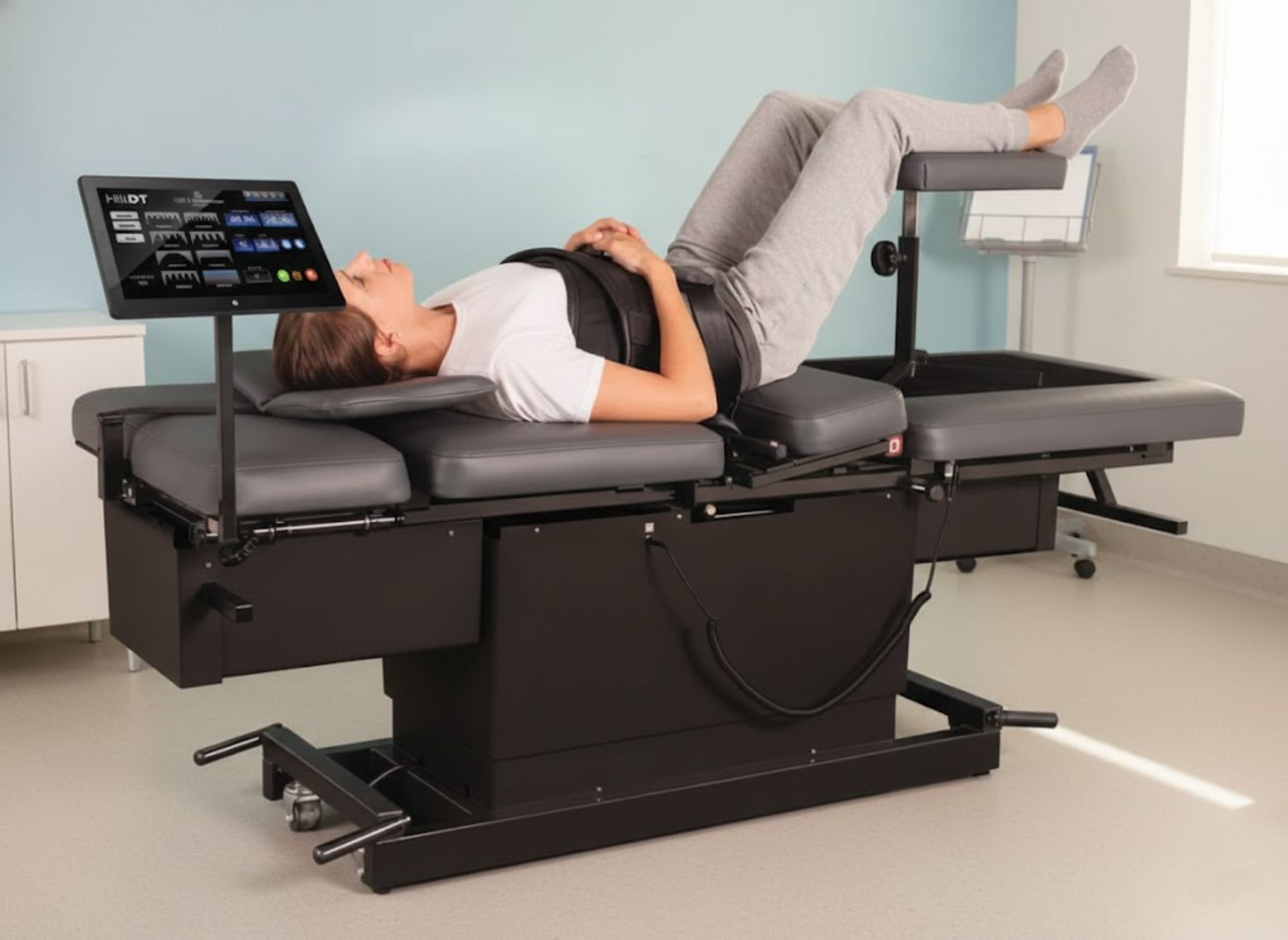
At Integra Health in Hawthorne, we use advanced non-surgical spinal decompression to create negative pressure within spinal discs.
This process encourages retraction of herniated or bulging disc material, promoting nutrient-rich fluid flow that accelerates natural healing. Unlike surgical options that require recovery time and carry inherent risks, our approach allows you to maintain your daily activities while addressing the source of your pain.
The reality most doctors won't tell you is that many back surgeries could be avoided with proper conservative care. Studies show that over 80% of patients with disc-related pain respond favorably to decompression therapy when combined with rehabilitative exercises. Ready to explore a proven alternative? Contact Integra Health today to schedule your comprehensive evaluation.
Conditions We Treat with Spinal Decompression in Hawthorne
Our spinal decompression program addresses multiple disc-related and nerve compression conditions that often resist traditional treatment approaches.
Schedule an AppointmentHerniated Discs
When the soft inner material of a spinal disc pushes through its outer layer, it creates pressure on nearby nerves. Decompression therapy creates space for the herniated material to retract naturally while improving circulation to promote tissue repair. Most herniation patients see measurable improvement in pain and mobility within 10-15 sessions.
Bulging Discs
A bulging disc occurs when the disc extends beyond its normal boundary without rupturing. Our targeted decompression addresses this by reducing intradiscal pressure and allowing the bulge to recede over time.
Sciatica
Sciatic nerve pain radiating down the leg often stems from disc issues in the lower back. By relieving pressure on the affected nerve root, decompression frequently eliminates leg pain faster than back pain itself.
Degenerative Disc Disease
Age-related disc deterioration benefits from improved nutrient flow that decompression provides. While we can’t reverse aging, we can optimize conditions for your body’s natural repair mechanisms.
Spinal Stenosis
Narrowing of the spinal canal creates nerve compression that decompression therapy can alleviate by creating more space within the vertebral column.
Failed Back Surgery Syndrome
Many patients who haven’t found relief after surgery respond well to decompression therapy, particularly when scar tissue or adjacent segment degeneration is involved.
Spinal Decompression vs. Traction vs. Spine Surgery
These three paths get lumped together, yet they work in completely different ways and fit different situations. Use this side-by-side view as a starting point, then let a proper exam settle which one your spine actually needs.
| Factor | Non-Surgical Decompression | Conventional Traction | Spine Surgery |
|---|---|---|---|
| How it works | Computer-controlled pull-and-release cycles create negative pressure inside the specific injured disc | A steady, constant pull stretches the whole spinal region at once | An operation removes disc material or fuses vertebrae to change the structure itself |
| Invasiveness | None. You remain fully clothed on a padded table | None, though the constant pull often triggers protective muscle guarding | Incisions, anesthesia, and time in a hospital or surgical center |
| Downtime | None. Most patients drive themselves to and from visits | None | Weeks to months of recovery depending on the procedure |
| Precision | Force, angle, and cycle pattern are programmed to your diagnosis and refined by your response | Generalized. It cannot isolate a single spinal segment | Targets the operated level, but the change is permanent and nearby segments absorb new stress |
| Best suited for | Herniated or bulging discs, sciatica, and degenerative disc pain that has not responded to basic care | Mild, muscle-related tension and general stiffness | Progressive weakness, bowel or bladder changes, or instability that conservative care cannot address |
To be clear, surgery has a real place. Progressive weakness, bowel or bladder changes, and structural instability are surgical problems, and if your exam points that way we will say so and help you find the right specialist. For the large group of disc patients who sit between living with it and operating on it, decompression is the middle path worth exploring first.
What a Decompression Visit Looks Like
Knowing the routine takes the mystery out of your first appointment. Here is how a typical visit unfolds at our Hawthorne clinic.
Exam and imaging review
Your first visit is evaluation only: history, orthopedic and neurological testing, and a review of any MRI or X-ray reports you already have. This is where we confirm decompression is safe and appropriate for you.
Getting set up
You lie fully clothed on the computerized table while a support harness is fitted around your pelvis, or your head and neck are cradled for cervical work. Positioning takes just a few minutes.
The decompression cycle
The table applies gentle, computer-guided cycles of pull and release. Most patients describe the sensation as a pleasant stretch, and some doze off during the session.
Recheck and adjust
We track your response from visit to visit and refine angles, force, and supporting rehab work as your spine changes. Your plan is set at your exam and updated as you progress.
Why Choose Integra Health for Spinal Decompression?
At Integra Health, we're committed to evidence-based care that puts your long-term wellness ahead of quick fixes. Care is led by Dr. Noble Thomas, DC, MSACN, serving Mount Pleasant and all of Westchester County from our Hawthorne office. Our team takes time to explain exactly what's happening in your spine and how decompression therapy fits into your complete recovery plan. We believe informed patients make better decisions about their health.
We consider your lifestyle, work demands, and personal goals when designing your program. Most importantly, we're transparent about what decompression can and cannot accomplish. Not every patient is a candidate, and we'll tell you honestly whether this approach is right for your specific condition. If you are weighing this against an operation a surgeon has already proposed, read how decompression compares with spine surgery for White Plains patients before you decide. Take the first step toward lasting pain relief. Contact us today to schedule your evaluation and discover whether spinal decompression is your path to recovery.

Spinal Decompression Therapy FAQs for Hawthorne Patients
Am I a candidate for spinal decompression?+
If you have been diagnosed with a herniated disc, bulging disc, sciatica, or degenerative disc disease and have not found relief with other treatments, you are likely a good candidate. We perform a thorough exam to ensure it is safe for your specific condition.
Is the treatment painful?+
No. In fact, most patients find it very relieving. You will feel a gentle stretch in your spine. The machine is computer-controlled to ensure the force is applied smoothly and comfortably.
How many sessions will I need?+
Because discs heal slowly due to poor blood supply, a typical treatment plan involves a series of sessions (often 20 to 24 visits over several weeks) to achieve lasting structural change and pain relief.
Can I do this if I have had back surgery before?+
It depends on the type of surgery. If you have had a microdiscectomy without fusion, you may still be a candidate. However, patients with metal hardware (fusion/rods) in the area of treatment are generally not candidates for decompression. We will review your surgical history in detail.
Is spinal decompression covered by insurance?+
Most insurance plans consider non-surgical spinal decompression to be elective and do not cover the specific code for the machine. However, other aspects of your care plan may be covered. We will verify your benefits and discuss affordable payment options.
What is the difference between this and an inversion table?+
Inversion tables use gravity and hang you by your ankles, which can strain the knees and hips and cause blood to rush to the head. Our computerized tables target the specific injured lumbar or cervical segment without the side effects or risks of hanging upside down.
Does spinal decompression help neck (cervical) problems?+
Yes. The same computer-controlled approach can be applied to the cervical spine for herniated or bulging discs in the neck, including cases with pain, tingling, or numbness radiating into the shoulder and arm. Cervical treatment uses much lighter forces than lumbar work, and your exam determines whether your neck is a safe fit.
Is there an age limit for spinal decompression?+
There is no fixed age cutoff. Candidacy comes down to your diagnosis and bone health rather than your birthdate. We screen older adults carefully for concerns like advanced osteoporosis, and many patients in their retirement years tolerate treatment comfortably because the forces are gradual and computer-controlled.