Services
Chiropractic CareSpinal DecompressionDeep Tissue LaserShockwave TherapyPRP TreatmentsNeuropathy TreatmentSports ChiropractorMassage TherapyNutrition CoachingPediatric CarePre & Postnatal CareAll ServicesConditions
Back PainNeck PainSciaticaShoulder InjuryKnee PainHip PainPlantar FasciitisAuto Accident InjuryWhiplashAreas Served
HawthorneMount PleasantWhite PlainsMount KiscoArmonkPleasantvilleChappaquaBriarcliff ManorTarrytownElmsfordValhallaThornwood


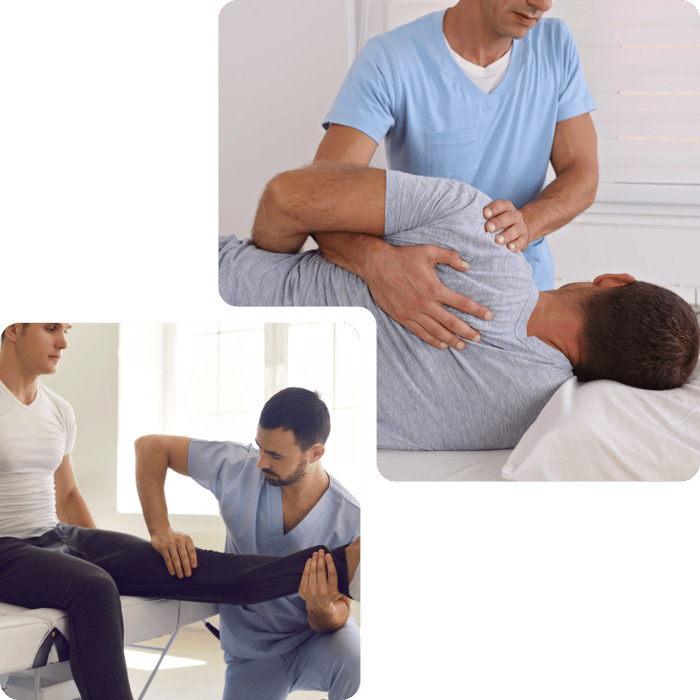
What Makes a Sports Chiropractor Different?
A standard visit asks where it hurts. A sports evaluation asks why the tissue failed under load in the first place. Before anyone treats your elbow or your knee, we watch how you hinge, rotate, land, and brace, because the painful spot is very often the victim of a restriction living somewhere else in the chain. For background worth reading before any consultation, the National Institute of Arthritis and Musculoskeletal and Skin Diseases covers how sports injuries are managed.
From there the plan blends precise adjustments with soft tissue treatment, corrective exercise, and honest checkpoints, all mapped against your training week rather than a generic template. You can read more about the approach on our sports chiropractic program page.
How Does Return to Play Work Here?
Rest alone does not rebuild an athlete, and pushing through pain rarely ends well either. Our return-to-play framework moves you through four stages, and progress is earned by what we can measure, not by how many days have passed on a calendar.
Settle the injury
Calm pain and swelling with gentle adjustments, soft tissue therapy, and activity changes that keep you moving without feeding the damage.
Restore motion and alignment
Re-establish joint mechanics and flexibility so the injured area, and the links above and below it, move the way your sport demands.
Rebuild capacity
Progressive strength and movement retraining, loaded step by step toward the speeds and forces of actual competition.
Earn the green light
We re-test strength, symmetry, and sport-specific movement before clearing you for practice, then full play, so the comeback holds.
Who Leads Your Sports Care?
Care at Integra Health is led by Dr. Noble Thomas, DC, MSACN. Rather than handing every athlete the same protocol, Dr. Thomas examines how you actually move, explains what the findings mean in plain language, and builds the plan around your training calendar and your goals.
That doctor-led, education-first approach is a large part of why patients from across the county have left the clinic 238+ five-star Google reviews.

Serving Athletes Across Westchester County
Hawthorne sits near the center of the county, where the Taconic State Parkway and the Saw Mill River Parkway converge, so athletes reach us from every direction. The Hawthorne Metro-North station on the Harlem Line is about a 5 minute walk from our door, and free parking sits directly in front of the building.
Thornwood: about 4 minutes away, close enough for an after-practice visit before dinner
Valhalla: about 6 minutes via Bradhurst Avenue
Pleasantville: about 7 minutes for students and rec-league regulars
Elmsford: about 10 minutes via the Saw Mill River Parkway
White Plains: about 12 minutes, easy to pair with a workday downtown
Chappaqua: about 12 minutes for families juggling school sports calendars
Briarcliff Manor: about 12 minutes for runners and weekend golfers
Mount Kisco and Armonk: about 15 minutes from the northern part of the county
Sports Chiropractic Questions from Westchester Athletes
How is a sports chiropractor different from a general chiropractor?+
A general chiropractic visit usually centers on relieving pain at the spine. A sports evaluation also examines how your whole body moves under the loads of your sport, then blends adjustments with soft tissue work, rehab exercise, and return-to-play testing so the injury does not come back the moment training resumes.
Do I need a referral to see a sports chiropractor in Westchester?+
No. In New York you can book directly with a chiropractor. If your particular insurance plan has referral requirements for reimbursement, our front desk flags that during your complimentary benefits check.
How quickly can I get back to my sport?+
It depends on the tissue involved, how long the problem has been building, and what your sport demands of it. Rather than guessing at a date, we re-test strength and movement at each stage of your plan and clear you for practice, then competition, when your body shows it is ready.
Do you treat youth and high school athletes?+
Yes. Young athletes from towns across Westchester County are a regular part of our practice. Care is scaled to growing bodies, with gentler techniques and close attention to the overuse injuries that show up during growth spurts and long seasons.
Can I get an adjustment and shockwave therapy in the same visit?+
Often, yes. Because chiropractic, shockwave therapy, deep tissue laser, and massage all live under one roof in Hawthorne, a single visit can stack the therapies your plan calls for instead of splitting them across different offices and different weeks.
Will my insurance cover sports chiropractic care?+
Many health plans cover chiropractic care for a diagnosed injury, while purely performance-focused visits are sometimes considered elective. We verify your benefits before your first appointment so you know what your plan covers and what honest self-pay options look like if it does not.
What happens at my first visit?+
Expect a health and training history, an orthopedic and movement exam, and a plain-language explanation of what we find. If care is appropriate, treatment usually begins the same day, along with a plan mapping visit frequency and return-to-sport milestones.