Services
Chiropractic CareSpinal DecompressionDeep Tissue LaserShockwave TherapyPRP TreatmentsNeuropathy TreatmentSports ChiropractorMassage TherapyNutrition CoachingPediatric CarePre & Postnatal CareAll ServicesConditions
Back PainNeck PainSciaticaShoulder InjuryKnee PainHip PainPlantar FasciitisAuto Accident InjuryWhiplashAreas Served
HawthorneMount PleasantWhite PlainsMount KiscoArmonkPleasantvilleChappaquaBriarcliff ManorTarrytownElmsfordValhallaThornwood


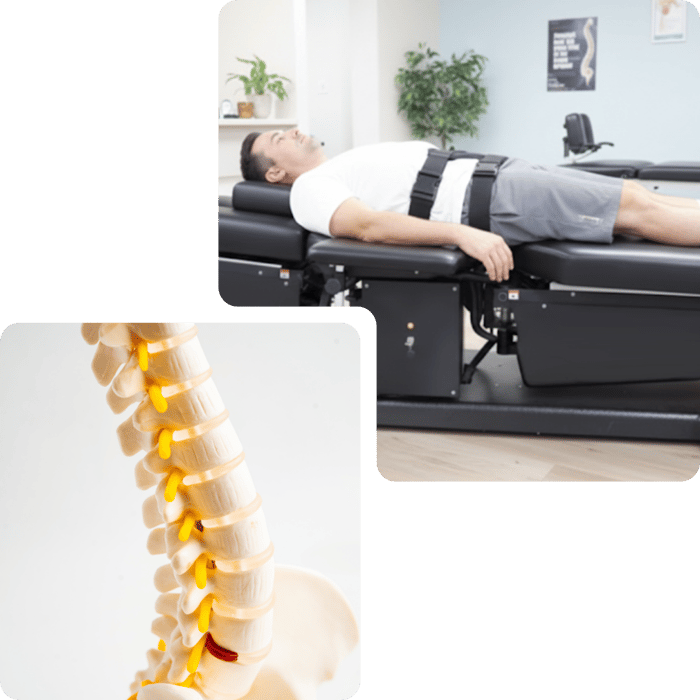
What Is Non-Surgical Spinal Decompression?
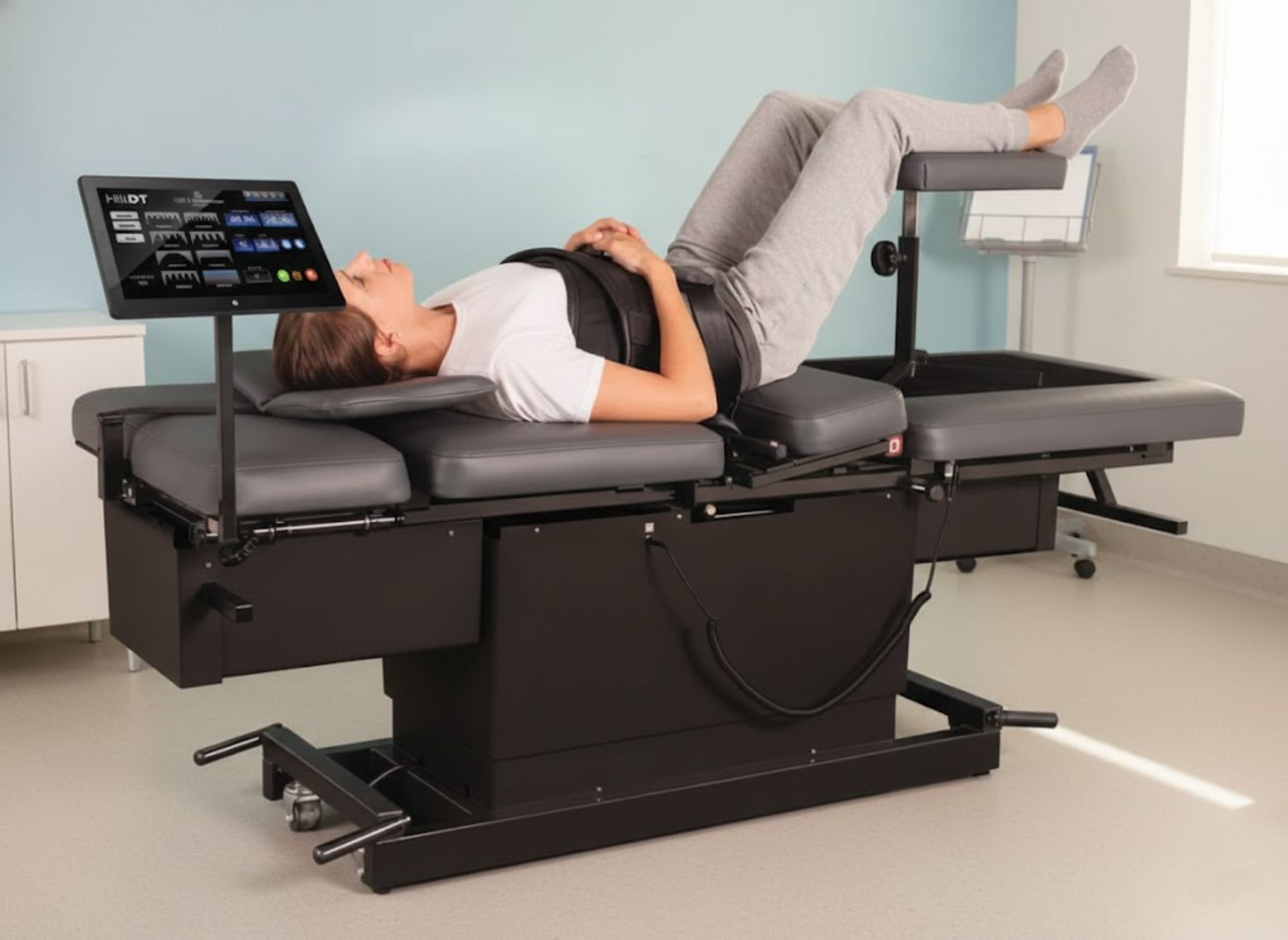
Spinal discs have almost no direct blood supply, which is why an injured disc heals so slowly on its own. Decompression therapy works on that exact weakness. An FDA-cleared class of computer-controlled tables applies precise, alternating cycles of stretch and release to the injured spinal segment, producing negative pressure inside the disc. That vacuum effect encourages bulging material to retract away from the nerve it is pressing on and draws water, oxygen, and nutrients back into the disc.
Care at Integra Health is led by Dr. Noble Thomas, DC, MSACN, who designs and supervises every decompression protocol personally. The full clinical breakdown of the therapy lives on our main spinal decompression therapy page; this page covers what Westchester County residents ask us most, from candidacy to cost.
Who Is a Candidate (and Who Is Not)
Decompression is powerful for the right spine and wrong for the wrong one, so we screen carefully before anyone gets on the table. Broadly, the conditions that respond are the disc and nerve-compression problems: herniated and bulging discs, sciatica, degenerative disc disease, and stenosis-related symptoms.
Often a good fit
Usually not a candidate
If the exam shows you are not a fit, you hear it that day, along with a referral toward the specialist who can actually help. A 5.0-star reputation built on 238+ five-star Google reviews does not survive putting the wrong patients on a decompression table.
One Clinic, All of Westchester County
Decompression only works if you can keep the visits, so our address matters as much as our table. Integra Health sits at 153 Broadway Suite 1 in Hawthorne, in the town of Mount Pleasant, with the Taconic State Parkway, Saw Mill River Parkway, and Bronx River Parkway all converging nearby. Free patient parking sits directly in front of the building.
Commuting by rail? The Metro-North Harlem Line stops at Hawthorne station, roughly a five minute walk from our door. Evening hours run to 7:00 pm on Monday, Wednesday, and Thursday, with Saturday morning appointments for anyone whose week is spoken for.
| Coming from | Drive to our Hawthorne office |
|---|---|
| Thornwood | about 4 minutes |
| Valhalla | about 6 minutes |
| Pleasantville | about 7 minutes |
| Elmsford | about 10 minutes |
| Chappaqua | about 12 minutes |
| Briarcliff Manor | about 12 minutes |
| White Plains | about 12 minutes |
| Tarrytown | about 15 minutes |
| Mount Kisco | about 15 minutes |
| Armonk | about 15 minutes |
Spinal Decompression Questions from Westchester Patients
Is spinal decompression the same as traction or an inversion table?+
No. Traction applies one continuous pull to the whole spine, and an inversion table simply hangs you upside down. A decompression table is computer controlled: it isolates the injured disc level and alternates between pull and release, which keeps surrounding muscles from tensing up and blocking the stretch. That cycling is what produces negative pressure inside the disc.
How many decompression sessions will I need?+
That is set at your exam, not by a sales script. The right number depends on which disc is involved, how long it has been irritated, and how you respond over the first stretch of care. Dr. Thomas reviews progress as you go and adjusts the plan instead of locking you into a fixed count.
Does spinal decompression hurt?+
Most patients describe a gentle, rhythmic stretch, and some relax enough to doze off on the table. Force ramps up and down gradually under computer control, settings are calibrated to your body, and you can stop a session at any point.
Can I do decompression if I have already had back surgery?+
Sometimes. Patients who had a discectomy without fusion are often still candidates. Fusion hardware or rods at the segment we would treat generally rules that level out. Bring your surgical records to the evaluation and you will get a straight answer, not a maybe.
Is there an age limit for spinal decompression?+
There is no fixed cutoff. What matters is bone quality and the specific condition, which is why we screen for severe osteoporosis and review imaging before treating. We care for working commuters and active Westchester retirees alike, with forces adjusted for each person.
Does decompression work for neck problems too?+
Yes. Cervical decompression applies the same negative-pressure principle with much lighter forces to discs in the neck. It is often used for arm pain, tingling, or numbness that begins at a compressed cervical nerve root.
What does spinal decompression cost?+
Decompression is priced as a course, not a single visit, so the number of sessions in your protocol matters most. Whether imaging is needed first, whether adjustments run alongside it, your plan, your deductible and your network status all move the figure. We verify benefits first. See how coverage and costs are worked out.
How soon do people usually feel a difference?+
It varies with how severe and how old the disc problem is, so we will not quote a timeline we cannot promise. Your response is monitored visit to visit, and if progress is not tracking the way it should, we change the plan rather than repeating what is not working.