
Back and neck pain can quietly reshape how you live. You start avoiding activities you once enjoyed, adjusting your posture to compensate for discomfort, or losing sleep because the aching and stiffness never fully let up. It is not always a single dramatic injury that sets it off, but the cumulative effect changes how you move, how you work, and how much energy you have left at the end of the day.
Spinal decompression therapy may be the right step when over-the-counter medications, rest, and general wellness strategies have not delivered the lasting relief you need. This approach focuses on identifying the structural source of spinal pain, restoring function to compressed discs and irritated nerves, and creating the conditions for the body to heal without surgery or long-term dependence on medication.
Why Spinal Pain Can Feel So Unpredictable
Back and neck pain symptoms can fluctuate because more than one system in the body is involved. A change in sleep quality, stress levels, physical activity, or even prolonged sitting at a desk can shift how intensely the body registers pain signals and how well it manages inflammation from one day to the next.
When the spine and nervous system are not functioning properly, even routine physical tasks can feel like a challenge. Compressed or herniated discs that irritate surrounding nerves, joint inflammation that limits range of motion, poor circulation that deprives disc tissue of oxygen and nutrients, and accumulated tension in the muscles and connective tissues of the back and neck can all contribute to the stiffness, soreness, and sharp or radiating pain that characterize chronic spinal conditions. Postural imbalances from prolonged screen use, sedentary work habits, and old injuries compound the picture and make symptoms feel inconsistent from day to day.
That is why meaningful relief from back and neck pain often requires care that targets the structural and physiological root causes of dysfunction rather than just addressing symptoms in isolation.
What Spinal Decompression Therapy Is and How It Works
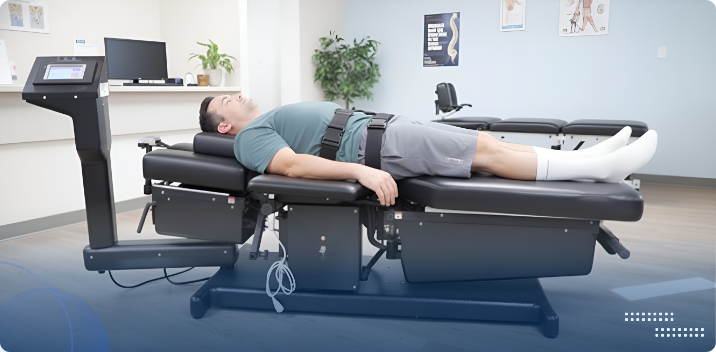
Spinal decompression therapy is a non-surgical, non-invasive treatment that gently stretches the spine using a specialized motorized traction table. By carefully and precisely elongating the spinal column, the therapy creates negative pressure within the intervertebral discs, which draws herniated or bulging disc material back toward its proper position, rehydrates disc tissue with fluid and nutrients, and relieves the compressive force that has been irritating surrounding nerves. The result is a reduction in pain, improved disc health, and a restored mechanical environment in which the spine can begin to heal.
At Integra Health, this process begins with a comprehensive examination that evaluates spinal alignment, disc integrity, nerve function, posture, and the patient's full health history. Dr. Noble Thomas and Dr. Ritika Merai use that information to design a personalized treatment protocol built around what is actually driving the patient's specific pattern of pain rather than a generalized approach. Treatment plans are non-surgical and structured to reduce or eliminate reliance on medication, with spinal decompression incorporated as a central component alongside other complementary therapies based on the individual's needs and goals.
This is not about a single session fix. It is about creating the conditions for lasting structural and functional improvement over a course of care, so progress builds and holds over time.

When Spinal Decompression Therapy Is the Right Choice
Spinal decompression is often a practical next step when you want durable relief and restored physical function rather than temporary symptom suppression. At Integra Health, the process begins with a thorough evaluation, and your care plan is built around the specific structural conditions and contributing factors driving your pain rather than a one-size-fits-all protocol.
Diagnose the Problem and Identify What Needs Support
When back or neck pain has become chronic or keeps returning, it helps to understand which structures are most involved before choosing a treatment approach. A comprehensive diagnostic evaluation examines spinal alignment, disc condition, joint integrity, nerve function, and soft tissue health to provide a clear, data-driven picture of what is causing the pain. This clarity makes it possible to design a targeted decompression protocol rather than cycling through generalized approaches that address symptoms without resolving the underlying structural problem.
Treat the Source to Restore Function
The spine is an interconnected system where the discs, vertebrae, nerves, and surrounding soft tissues all depend on one another to function well. When a disc becomes herniated or degenerates, or when spinal joints are compressed and misaligned, the whole system compensates, and that compensation often creates secondary pain in areas far from the original problem. Spinal decompression therapy treats the source of structural dysfunction directly, which can translate into reduced pain, improved range of motion, better posture, relief from radiating nerve pain such as sciatica, and the ability to return to activities that chronic spinal pain had made difficult or impossible.
Build Progress That Lasts Beyond the Treatment Plan
The goal is not to feel better only during treatment sessions. The goal is for the structural corrections and disc recovery built through consistent care to carry over into daily life and sustain themselves after the active treatment phase concludes. Many patients at Integra Health begin noticing meaningful changes within the first few weeks of care, and structured multi-week protocols are typically recommended for chronic disc and nerve conditions that require lasting tissue repair and recovery. As the body heals and adapts, the improvements become self-reinforcing, and patients are able to maintain their progress through supportive lifestyle habits and periodic check-ins.
Spinal decompression therapy may be a good fit if you are experiencing chronic lower back or neck pain, herniated or bulging discs, degenerative disc disease, sciatica or radiating pain into the arms or legs, spinal stenosis, facet joint syndrome, or a general sense that your spinal function and mobility have been declining over time.
How Spinal Decompression Fits Into a Comprehensive Care Plan
Spinal decompression works best when it is part of a broader approach that also addresses posture, movement habits, muscle balance, and any other contributing factors. At Integra Health, a comprehensive care plan means your treatment is coordinated with a full understanding of your individual condition and daily life demands, not delivered as a disconnected series of generic sessions.
Support Recovery Through Complementary Therapies
Spinal decompression creates the structural conditions for healing, and complementary therapies reinforce and accelerate that process. Chiropractic adjustments restore proper spinal alignment and joint mechanics so that decompressed discs remain in a healthy mechanical environment between sessions. Class IV deep tissue laser therapy reduces inflammation in the surrounding soft tissues and promotes cellular repair at an accelerated rate. Massage therapy relieves the chronic muscle tension that often develops alongside disc and nerve dysfunction and that can pull the spine back toward misalignment if left unaddressed. Shockwave therapy supports tendon and connective tissue repair in areas that have been under chronic mechanical stress. When these modalities are combined with spinal decompression, patients consistently achieve deeper and more durable results than any single therapy can deliver in isolation.
Support Recovery Through Movement and Lifestyle
Prolonged inactivity is one of the most significant contributors to chronic spinal pain and disc degeneration. When the body is not moving regularly, circulation to the discs decreases, the muscles supporting the spine weaken, and the tissues that need healing are deprived of the oxygen and nutrients they require. Guided movement, gentle stretching, and progressive activity reinforce the structural improvements made during decompression treatment and reduce the likelihood of pain returning. The care team provides individualized guidance on how to incorporate supportive movement into daily life in a way that feels manageable, protects the spine during the recovery process, and builds confidence over time.
Building Progress That Supports Long-Term Spinal Health
The goal of spinal decompression care at Integra Health is not simply to resolve an acute episode of pain. The goal is to restore the structural integrity and functional capacity of the spine in a way that reduces the likelihood of future disc problems, nerve irritation, and degenerative progression. Patients who complete their full recommended protocol and follow through with between-session guidance from the care team consistently achieve more durable outcomes and are better positioned to maintain their spinal health over the long term.

Taking Your Next Step
If chronic back pain, neck pain, disc problems, or radiating nerve symptoms have been changing how you work, move, or enjoy your daily life, you do not have to accept those changes as permanent. Spinal decompression therapy can address the structural and physiological causes of your symptoms. A comprehensive diagnostic evaluation can identify exactly where the problems are. A personalized care plan can target the multiple factors contributing to your condition and support your body's capacity to heal.
The right care plan matches your specific diagnosis, your goals, and what you need to function well in everyday life. If you want a clear next step and an evidence-based approach to resolving your spinal pain without surgery or long-term medication, schedule an appointment at Integra Health and find out whether a non-surgical decompression treatment plan is the right fit for you.
Ready to take the next step?
Talk with the Integra Health team about a Spinal Decompression Therapy plan built around your goals, in Hawthorne, NY.