
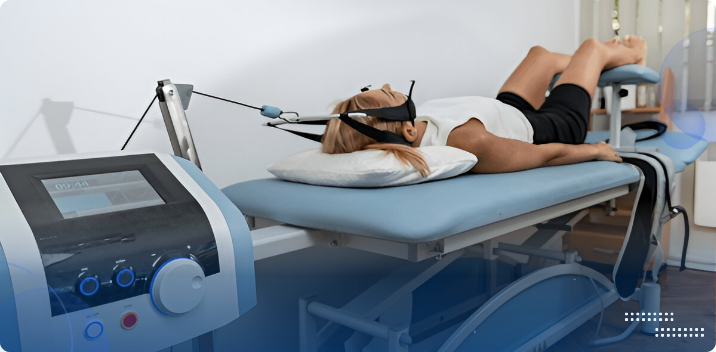
If you are looking into decompression therapy in Mount Pleasant, NY , an instant fix is probably not the goal. The focus is usually something more specific: neck pain that feels like pressure, tightness, or a constant load that never fully lifts.
For many high-functioning professionals, neck discomfort is not sudden. It’s persistent. It shows up during long screen time, after commuting, or when stress pushes your shoulders up without you noticing. Over time, that daily strain can create a physiological feedback cycle where irritation leads to guarding, and guarding keeps irritation alive.
Why Pressure-Related Neck Pain Can Feel So Stubborn
Neck pain often gets described as a muscle issue, but pressure-related symptoms can involve more than sore tissue.
When joints and soft tissues in the cervical spine are irritated, your nervous system can become more protective. The sympathetic nervous system may stay more active, which increases muscle tone and reduces the sense of ease in movement. This is one reason the neck can feel tight even when you are resting.
Some people also notice signs that feel more like a stress response than a neck problem at first, such as shallow breathing, jaw tension, or sleep disruption. Because the cervical sympathetic chain is located near the neck, irritation in this area can have complex and overlapping effects with stress responses.
A key point is this: the goal is not only to calm pain. It’s to reduce the mechanical and neurological drivers that keep the area on alert.
Can Decompression Reduce Pressure-Related Neck Pain?
Decompression is often discussed like a simple stretch, but effective traction is more deliberate than that. The concept is gentle unloading.
Pressure-related neck pain can build when spinal joints and discs are carrying more load than they can tolerate. If local structures are irritated, nearby muscles may tighten to protect the area, and motion can become less smooth. That can increase the sense of compression and stiffness, especially after sitting.
Decompression therapy aims to reduce mechanical stress in a controlled way. It can also help interrupt guarding patterns by giving the nervous system a clearer signal that the neck can move safely again.
This is not about forcing a change. It’s about creating conditions that support steadier motion, better tolerance, and less pressure sensitivity over time.

How Gentle Traction Works and Who It May Help
Gentle traction is typically used when your symptoms suggest that unloading could be useful. It is not the right tool for every neck problem, and that is part of what makes evaluation important.
Signs You May Be a Good Fit
Some patients respond well to traction-based care when their symptoms match a pressure pattern, such as:
-
Neck stiffness that ramps up with long sitting.
-
A heavy or compressed feeling at the base of the skull.
-
Pain that worsens with sustained posture, like laptop work.
-
Symptoms that ease when you change positions and move around.
-
A sense that the neck needs time to warm up each day.
Situations That May Need a Different Approach
Decompression may not be the starting point if your issue is mainly unstable movement, severe weakness, or a pattern that needs a different clinical priority. Certain red-flag symptoms also call for prompt medical attention, especially sudden severe changes, major trauma, or progressive neurological signs.
A thoughtful provider will look at your history, your symptom timing, and how your body responds to basic movements before deciding whether traction fits.
Why Integra Health Fits Mount Pleasant and Hawthorne Workdays
In this part of Westchester, neck pain often lives inside a busy schedule. People are moving between meetings, commuting routes, and family obligations, and they want care that is clear and efficient.
Integra Health Chiropractic Rehabilitation Wellness is located at 153 Broadway, Suite 1, Hawthorne, NY. Many patients find it convenient when they are coming from Mount Pleasant neighborhoods, passing through Thornwood, or heading down Route 9A and nearby parkway corridors. It can also fit well for people moving between work in White Plains and errands closer to home.
What matters even more than location is the approach. Neck pain rarely exists in isolation. It can be tied to upper back stiffness, shoulder mechanics, breathing patterns, training load, or workstation setup. When a plan ties the symptoms to clear mechanical and nervous system drivers, it usually feels more practical, especially for professionals who want solid reasoning instead of trial and error.
This is also where an integrated clinic matters. Depending on your needs, care may coordinate services such as chiropractic care and massage therapy to support both joint mechanics and soft tissue tone, along with movement guidance to help results hold.
What to Expect During a Visit
An organized visit is a sign of quality. You should leave knowing what the working theory is and what the next step looks like.
Step 1: A Focused Evaluation
Your provider will review your symptom timeline and what makes pain better or worse. They may look at range of motion, posture, and how your neck responds to simple loading and movement tests. This helps clarify whether the problem is more about irritation, movement control, or overload.
If your pattern suggests pressure sensitivity, decompression may be discussed as part of the plan.
Step 2: The Decompression Session
Most patients describe traction sessions as calm and controlled. The goal is gentle decompression, not aggressive pulling. Many people notice that the neck feels lighter after the visit or that their shoulders drop without effort.
Sessions are often paired with guidance that helps the progress hold, such as mobility work, postural resets, or simple strength progressions.
Step 3: Supporting Better Mechanics Between Visits
The best decompression results usually come when the rest of your day supports the work. That does not mean a complex routine.
It can indicate small changes like adjusting screen height, breaking up long sitting blocks, and choosing short movement “check-ins” that keep the cervical spine from locking back into guarding. For some patients, stress management is also part of the plan because nervous system tone influences muscle tension.

Conclusion
Neck pain that feels like pressure can be exhausting because it is rarely only one issue. It’s often mechanical load, nervous system protection, and movement habits reinforcing each other. Decompression can be a smart option when gentle traction reduces stress on sensitive structures and helps the body stop bracing.
If you have been considering decompression therapy in Mount Pleasant, NY , a clear evaluation is the most efficient place to start. When you are ready, schedule an appointment with Integra Health in Hawthorne to talk through your symptoms, your workday demands, and what a realistic plan could look like.
Ready to take the next step?
Talk with the Integra Health team about a Spinal Decompression Therapy plan built around your goals, in Hawthorne, NY.