
Two athletes can walk in with the same complaint and need completely different care. A runner with hip tightness and a golfer with hip tightness are rarely dealing with the same problem, because their sports load the body in opposite ways. Running is repetitive, vertical, and single-leg. Golf is rotational, asymmetric, and built around one explosive movement repeated dozens of times per round.
That difference matters more than most people expect. When care is planned around the sport rather than the sore spot, the assessment asks better questions and the plan tends to hold up once training resumes.
Athletic Pain Often Starts Before an Injury Feels Serious
Many active people wait until pain limits a workout before asking for help. The earlier signs are quieter.
A runner may feel one side working harder on hills. A golfer may notice less rotation at the top of the backswing. A tennis player may feel shoulder tightness only after serving. A weekend athlete may need more recovery time after an activity that used to feel routine.
These shifts often point to compensation. When one area is not moving well, a nearby region absorbs more of the work. That pattern changes how force travels through the body during training and daily activity. Overuse injuries develop through exactly this kind of repeated stress rather than a single dramatic moment, which is part of why they are easy to dismiss until they are entrenched.
Why the Sport Changes the Assessment
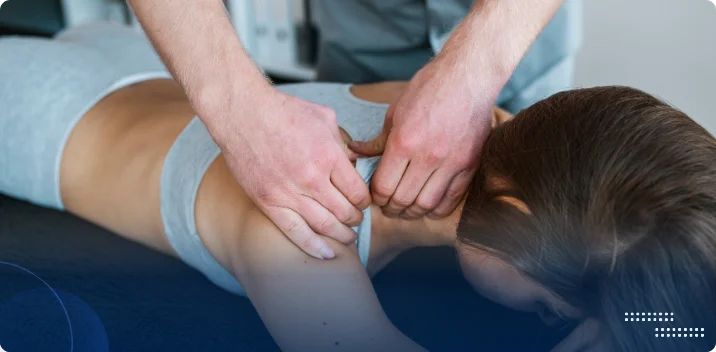
Sports chiropractic care looks at how your body performs during real movement. An exam may cover joint mobility, muscle tone, posture, balance, soft tissue quality, strength, and coordination. What changes between athletes is the emphasis.
Runners
Runners deal with recurring stress through the hips, knees, ankles, calves, and feet. Because running is a single-leg activity repeated thousands of times per outing, small differences in hip control or ankle motion compound quickly.
Limited ankle mobility, for example, can change squat depth, landing mechanics, and stride. An assessment can help clarify whether the painful area is the source of the problem or simply where stress is collecting. That distinction matters for anyone dealing with knee pain that flares during training, where the knee is often the symptom rather than the cause.
Golfers
Golf demands rotation, balance, hip mobility, thoracic motion, and shoulder control, all sequenced in under two seconds. When rotation is limited somewhere in that chain, the lower back, lead shoulder, or elbow often absorbs the difference.
Care tends to focus on restoring rotation where it is missing so the swing stops borrowing motion from segments that were never built to supply it.
Weekend Athletes
Weekend athletes move between long, mostly seated workweeks and short bursts of intense activity. That swing challenges tissue tolerance more than steady training does, and sudden increases in activity are a recognized contributor to sprains and strains.
For these patients the plan often leans practical: warmup structure, activity pacing, mobility work, and the early signals worth acting on.
The Mechanical Why
Sports injuries usually involve more than irritated tissue. They can include joint restriction, altered neuromuscular control, fatigue, and uneven force distribution.
When a joint loses normal motion, the body adapts by changing timing or recruiting nearby muscles differently. The nervous system tracks all of this through proprioception, the sense of where your body is positioned in space. When that feedback becomes less precise, the body often protects itself with tightness, guarding, or reduced range of motion.
Manual care can address the restrictions. Soft tissue work may improve muscle glide where adhesions limit motion. Corrective exercise can retrain the patterns that keep loading the same tissue.
Local Care for Active Patients in Hawthorne
Integra Health is located at 153 Broadway Suite 1 in Hawthorne, close to the Hawthorne Train Station and the businesses along Broadway. Patients also travel from Valhalla, Thornwood, Pleasantville, Mount Pleasant, Elmsford, and White Plains, with access from the Saw Mill River Parkway, Taconic State Parkway, and Route 287.
That access matters more than it sounds for athletes, because sport-specific care depends on reassessment as training load climbs back up. A plan that is never re-checked against real training is a guess.
What to Expect During Your Visit
Your first visit should start with a conversation about your sport, training schedule, symptoms, injury history, and goals. Expect questions about when discomfort appears, which movements bring it on, and whether performance has changed.
The physical exam may include posture, range of motion, joint mobility, gait, balance, strength, and sport-specific movement. A runner and a golfer should not receive the same screening, because their sports do not stress the same structures.
If care is appropriate, a plan may combine adjustments, soft tissue treatment, corrective exercise, and guidance on modifying activity while tissue recovers. A full athletic movement assessment is where that plan starts.
When to Schedule an Evaluation
You do not need to wait until pain stops you completely. It may be worth an evaluation if symptoms keep returning, one side feels weaker or tighter, your form has changed, or recovery takes longer than it used to.
Pain during running, swinging, lifting, jumping, throwing, or cutting belongs on that list, as does repeated tightness in the same area after activity. General guidance on managing sports injuries supports early attention over waiting, particularly when the same complaint keeps returning.
A Clear Next Step
Athletic pain is usually a signal that the body is working around a restriction, an imbalance, or a movement pattern that needs attention. Understanding that pattern helps you make better calls about training, recovery, and how hard to push in a given week.
If you run, golf, lift, or play weekend sports around Hawthorne and want care planned around your actual sport, schedule an appointment to review your symptoms, assess your movement, and talk through what fits your goals.
Ready to take the next step?
Talk with the Integra Health team about a Sports Chiropractic plan built around your goals, in Hawthorne, NY.